
This is the article the category likes least, and it is the one that follows most directly from the chemistry set out elsewhere on this site. If a metal oxide is not inert on skin, and it is not, there is no reason to expect it to be inert in water.
The assumption being examined
Reef safe products are overwhelmingly mineral products, and the argument runs that because the filter is a mineral, it belongs in the natural world and cannot do harm there. Stated that plainly, the reasoning is visibly weak: arsenic, lead and asbestos are all minerals, and their presence in nature has no bearing on their effects. But the assumption is rarely stated plainly. It arrives as an implication.
Mineral filters are safe for the sea because they are natural minerals
- What would have to be true
- That the metal oxides used in sunscreens are environmentally inert in aquatic systems.
- That natural origin corresponds to environmental harmlessness.
- What is established
- Zinc oxide dissolves in aqueous media, releasing zinc species, and zinc is toxic to a range of aquatic organisms at concentration. Zinc appears in water quality standards for that reason.
- Titanium dioxide, particularly at the nanoscale, is photocatalytically active, and sunlit surface water is exactly the condition under which that activity generates reactive oxygen species.
- Both are persistent inorganic particles that do not biodegrade and can settle into sediment.
- What is not established
- That mineral filters are environmentally inert.
- That natural origin has any bearing on environmental effect.
- That the environmental profile of mineral filters has been assessed to the standard that would support a marine safety claim.
Zinc oxide in water
Zinc oxide is sparingly soluble, and sparingly is not the same as insoluble. In aqueous media it dissolves slowly to release zinc species, and the rate depends on pH, ionic strength, the presence of complexing agents and the particle's surface area. Fine particles, having far more surface area per unit mass, dissolve faster.
Zinc is an essential trace element for organisms and is toxic above a threshold, which is the standard pattern for essential metals. Aquatic toxicity of zinc is well characterised across a range of organisms, which is why environmental quality standards for zinc in surface water exist. The relevant question for sunscreen is therefore not whether zinc can harm aquatic life, which is established, but whether sunscreen contributes concentrations that matter in the places where it enters water.
That is an exposure question, and it is the same kind of question that the coral evidence for organic filters raises. It has been studied less, largely because the research attention followed the policy attention, and the policy attention went to the substances that were named in legislation.
Titanium dioxide in water
Titanium dioxide is far less soluble and its issue is different. It is a photocatalyst. In sunlit surface water, absorbed ultraviolet generates charge carriers that can produce reactive oxygen species at the particle surface. On skin this is managed by using the less active crystal form and by coating. In water, after a coating has weathered, that management is no longer guaranteed.
Nanoscale titanium dioxide is also persistent. It does not degrade, it aggregates and settles into sediment, and its behaviour there over time is an active research area. The particles can also act as carriers for other substances adsorbed to their surfaces.
Metal oxide filters, environmental profile
Zinc oxide; Titanium dioxide; and their nanomaterial formsPersistent inorganic particulate materials with surface coatings intended for cosmetic performance rather than for environmental persistence.
Enter water through bathing, showering and laundry, and reach coastal water directly or through wastewater treatment.
Do not biodegrade. Zinc oxide releases zinc species; titanium dioxide is photocatalytically active in sunlit water; both can settle into sediment.
Environmental concentrations near heavily used bathing sites; coating weathering rates in seawater; sediment fate and effects on benthic organisms; interaction with other stressors.
What this article does not claim
It does not claim that mineral sunscreen harms reefs. No such finding is asserted here and none is available to assert. What it establishes is narrower and sufficient:
- The metal oxides are not environmentally inert. Both have known mechanisms of aquatic effect.
- Neither biodegrades, so the persistence argument that is made against synthetic materials applies to them with more force, not less.
- The comparative question, whether a mineral product has a lower marine impact than an organic filter product, has not been answered by anyone, and the marketing that asserts it has not attempted the assessment.
What happens to a coating once it leaves the skin
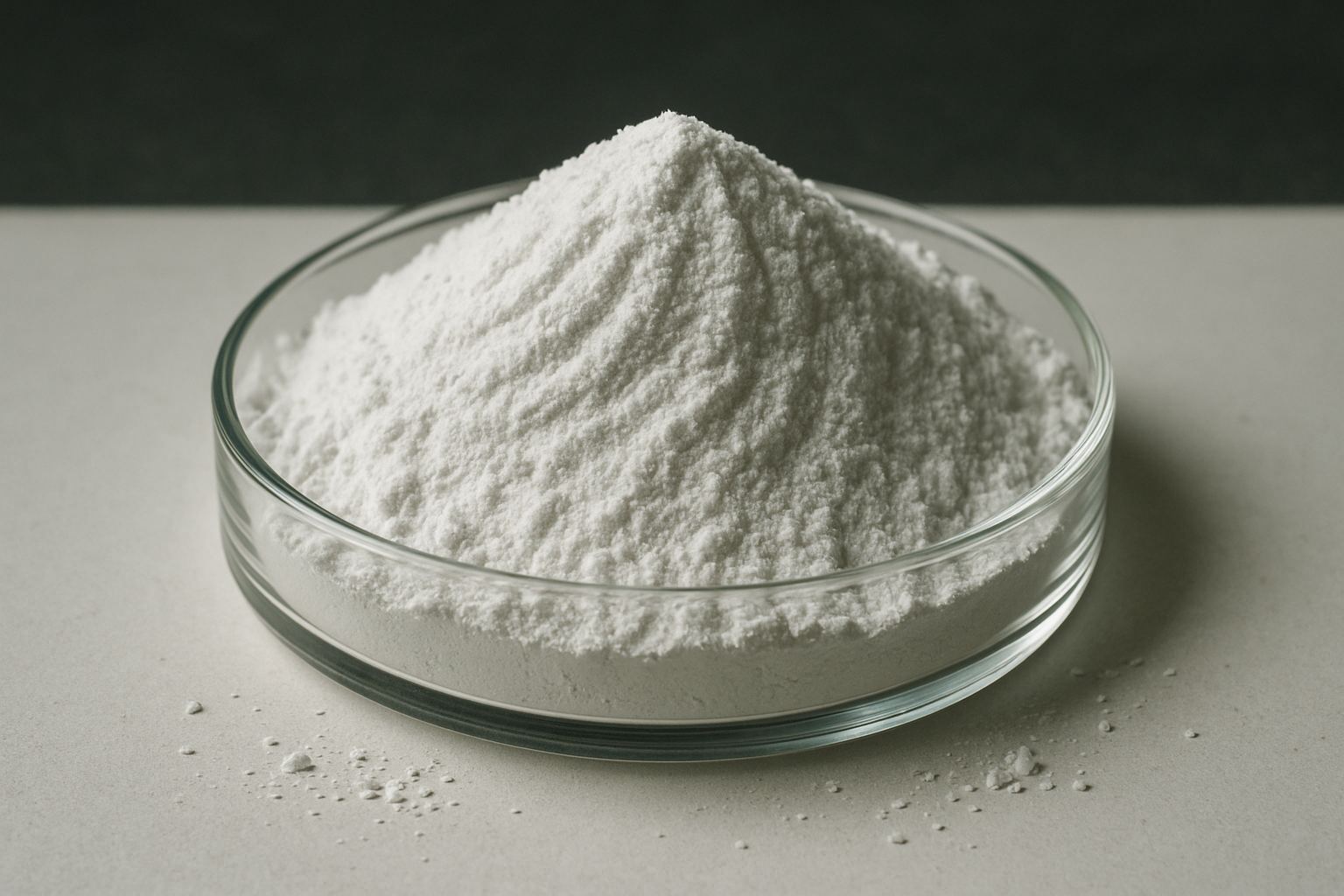
The coatings on cosmetic metal oxide particles are engineered for a specific job: keeping particles dispersed in an emulsion, controlling how they wet into an oil phase, and suppressing surface reactivity for the shelf life of the product and the hours it spends on skin. They are not engineered for persistence in seawater, and there is no reason they would be.
Once a particle enters water, its coating is exposed to salinity, mechanical abrasion in surf and sand, microbial activity, and continuous ultraviolet irradiation. Silica and alumina coatings can dissolve or be abraded; organic coatings can be degraded. As a coating thins, the properties it was suppressing return: dissolution rate rises for zinc oxide, and photocatalytic activity becomes accessible for titanium dioxide.
The rate at which this happens under realistic marine conditions is not well characterised in the public literature, which is one of the reasons the comparative question is difficult. It is also the reason that assurances based on the behaviour of a freshly manufactured, fully coated particle do not settle the environmental question, because the particle in the sea is not that particle any more.
Why the comparative question is hard
To answer it properly you would need, for each product, the mass of each filter entering the water per bather, the environmental concentration that produces at a site, the toxicity of each filter to the relevant organisms at their relevant life stages, the persistence of each in water and sediment, and an integration of all of that into a comparable measure. You would then need to do it for the rest of the formula, and for the packaging and the manufacturing, because the Green Claims Code asks for the full life cycle.
Nobody has done this. It is a large piece of work and it would probably produce an answer that varies by site and by product. In its absence, claims in either direction are assertions.
Whatever the comparative answer turns out to be, less product entering the water means less of whatever the effect is. Clothing and shade cover skin without putting anything in the sea, and applying product well before entering water reduces shedding. Those measures are robust to the uncertainty.
The route that gets ignored
Attention focuses on swimmers because the image is vivid. A substantial route into the aquatic environment is domestic: showering, bathing and laundering towels and clothing, which sends product to wastewater treatment. Treatment removes some materials efficiently and others poorly, and particulate inorganic material tends to partition into sludge, which is frequently applied to land.
That changes the picture in a way that is inconvenient for a purchase based solution. It means a person who never swims in the sea still contributes, and it means the effective interventions are at the level of treatment infrastructure and sludge management rather than at the level of which tube you pick up.
The status recorded
The claim that mineral filters are safe for the sea because they are natural minerals is recorded as contradicted. Both metal oxides have established mechanisms of aquatic effect, neither biodegrades, and natural origin has no bearing on environmental behaviour. The narrower and more useful position is that the comparative marine impact of the two filter classes is unresolved and that nobody selling either has assessed it.