
This is the argument the category is loudest about and least precise in. It is worth separating into three piles: what has been assessed and settled to the satisfaction of the scientific committees, what has been assessed and carries stated conditions, and what remains genuinely open. All three piles have things in them.
What was assessed, and by whom
Nanoscale forms of both metal oxides were reviewed by the Scientific Committee on Consumer Safety, which publishes its opinions in full, complete with the parts where it says the data are inadequate. Those opinions run to hundreds of pages, they cite the primary studies, and they are the single most useful documents available to anyone with a view on this subject. Very little of the writing about nanoparticles in sunscreen shows evidence of having read them.
The assessments covered characterisation of the material, dermal absorption studies in several models, genotoxicity, photogenotoxicity, repeated dose toxicity, and inhalation where relevant. The conclusions were qualified rather than absolute, which is normal and which is exactly what makes them useful.
Pile one: dermal application to intact skin
The consistent finding across dermal absorption studies of both oxides is that particles remain in the stratum corneum, the outermost layer of dead, keratinised cells, and in the openings of hair follicles, without crossing into viable epidermis in any meaningful quantity. This has been examined in excised human skin, in animal models, and in human volunteer studies with tape stripping and analysis.
Follicular accumulation is real and is sometimes presented as alarming. Hair follicles are invaginations of the skin surface, lined with the same barrier, and material sitting in a follicular opening is still outside the body in the relevant sense. It also clears with the natural outward flow of sebum and with washing.
Nanoparticles in sunscreen pass through your skin and into your bloodstream
- What would have to be true
- That nanoscale metal oxide particles cross the stratum corneum into viable epidermis and reach systemic circulation at measurable levels from normal use.
- That the assessments finding otherwise were inadequate or superseded.
- What is established
- Dermal absorption studies of nanoscale zinc oxide and titanium dioxide have consistently reported that particles remain in the stratum corneum and in follicular openings.
- Scientific committee assessments have concluded on that basis that dermal use on healthy, intact skin does not present a systemic risk under the stated conditions.
- What is not established
- That no penetration occurs at all under every condition. Assessments are explicit that they concern healthy, intact skin.
- That the question of damaged, sunburnt or diseased skin has been studied to the same depth. It has not.
Pile two: assessed, with conditions attached
Two conditions recur and both are in the regulatory entries rather than being optional guidance.
Inhalation
Assessment work advised against the use of nanoscale metal oxides in applications that could be inhaled, meaning sprayable products and loose powders. The reasoning is straightforward: the lung has no stratum corneum. Material deposited in the deep lung is in a very different situation from material sitting on dead keratin, and inorganic particles are the classic case where inhalation toxicology and dermal toxicology diverge sharply.
This is the most important practical point in the whole subject and it is almost never the one that gets discussed. A cream is not a spray.
Surface treatment and photocatalytic activity
The entries address the coating and the photocatalytic activity of the material, because uncoated titanium dioxide in particular is an efficient photocatalyst. Coating is therefore part of the specification rather than a refinement, and a compliant product is one made with material meeting those conditions.
Nanoscale metal oxide filters
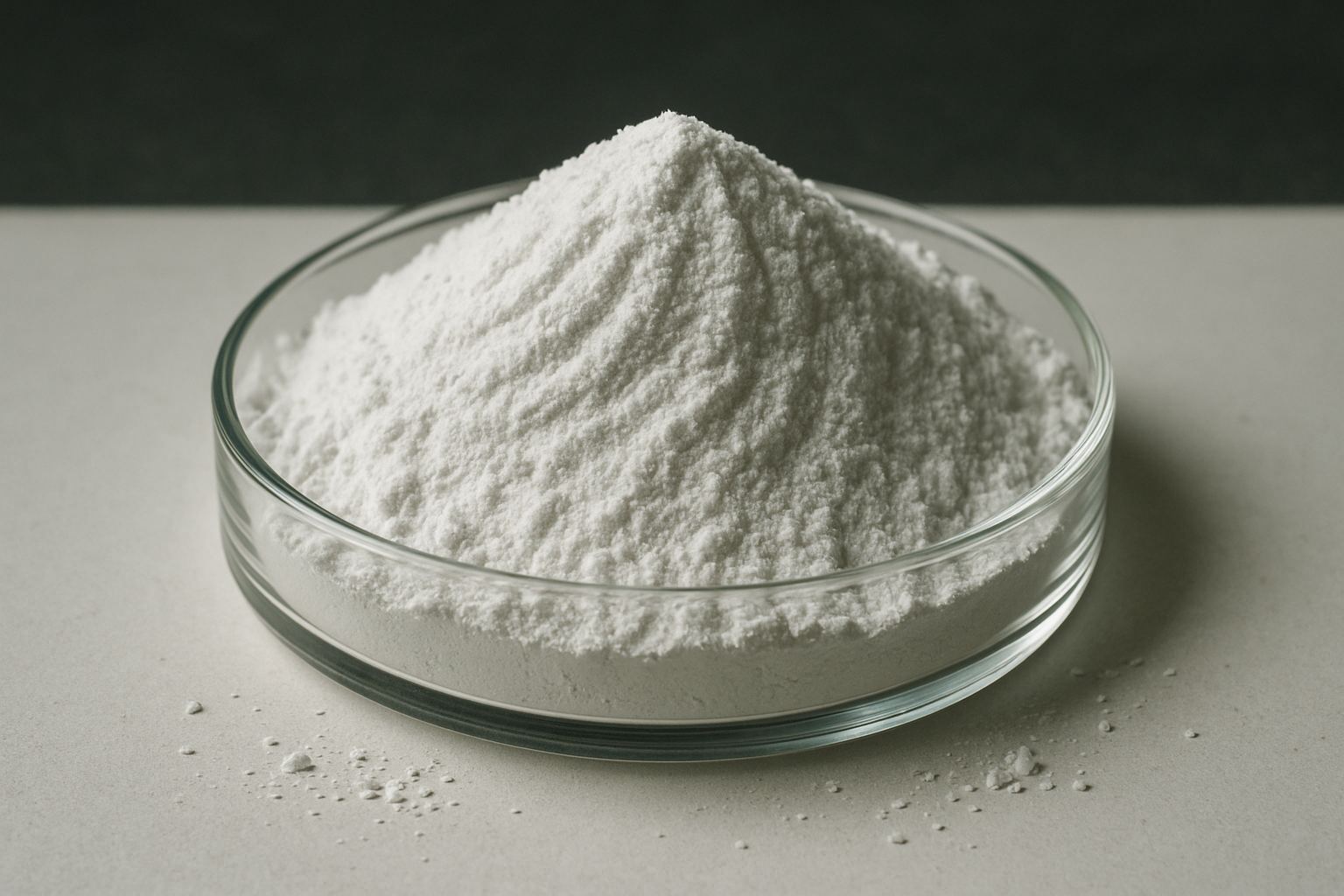
Zinc oxide (nano); Titanium dioxide (nano)Metal oxide filters with a particle size distribution falling within the regulatory nanomaterial definition, surface treated and usually supplied as pre made dispersions.
Provide ultraviolet absorption with much reduced visible light scattering, which is what makes a transparent mineral sunscreen possible.
Advised against in applications where inhalation could occur. Strong tendency to agglomerate, which returns both whiteness and coverage gaps if dispersion fails.
Coating durability across shelf life and wear; behaviour on compromised skin; environmental fate of the particles once washed into water.
Pile three: what is genuinely open
- Compromised skin. Sunburnt, eczematous, broken or freshly treated skin has a disrupted barrier. The dermal studies were largely conducted on intact skin, and the assessments say so plainly. This is a data gap, not a finding of harm.
- Coating durability. Coatings are applied to control dispersion and suppress surface reactivity. How completely they survive manufacturing shear, two years on a shelf, and hours of rubbing on skin is a fair question with limited public data.
- Environmental fate. Once a product is washed off, the particles enter wastewater or seawater. What happens to them there, including dissolution of zinc species and photocatalysis by titanium dioxide in sunlit surface water, is an active research area. It is covered in mineral filters and the environment.
- Long term repeated exposure. Assessments model lifetime exposure from assumptions about use. Those assumptions are conservative and they are still assumptions.
What a reader can reasonably conclude
That a cream or lotion containing nanoscale metal oxides, applied to healthy, intact skin, is not the thing to worry about, and that the evidence supporting that is more substantial than the evidence supporting most claims in this category on either side. That the spray question is real and is the reason the conditions exist. And that the environmental questions are the least settled and the most likely to move.
What a reader should not conclude is that non nano is a safety upgrade. That claim is examined in nano and non nano labelling, and it does not hold, because the labelling threshold was not drawn where skin penetration begins and because the alternative is a coarser particle that whitens more and is therefore more likely to be applied thinly.
If your skin is broken, sunburnt, inflamed, or recently treated, the question of what to put on it is clinical. Ask a pharmacist or your GP. If you are worried about a mole or a change in your skin, contact your GP; the NHS pages on skin cancer symptoms explain what to look for and how to get seen.
How to read a committee opinion, if you want to
They follow a standard shape and the useful parts are easy to find. The terms of reference state the question the committee was asked. The body sets out the physicochemical characterisation, which is where you learn what material was actually studied, and this matters because a study of uncoated anatase says little about a coated rutile grade. The dermal absorption section reviews the penetration studies. Then there is a discussion, and a conclusion that is usually a conditional sentence rather than a verdict.
The most instructive sections are the ones listing what the committee considered insufficient. Regulatory science is unusually candid about its own gaps, and reading those passages is a good corrective to writing on either side of this argument that presents the matter as closed.
A note on how the argument is conducted
The nanoparticle debate has an asymmetry that is worth naming. One side asserts a mechanism of harm without a study, and the other asserts complete safety without the qualifications the assessments actually contain. Both are overstating. The assessments say something narrower and more useful: on healthy intact skin, in non inhalable forms, with specified material characteristics, the available evidence does not indicate a systemic risk, and the following questions remain.
That sentence is less satisfying than either headline and it is what the evidence supports.